There was a time when measles was simply part of childhood in America.
Before the measles vaccine became available in 1963, millions of Americans were infected during a typical year. Most recovered. Some didn’t. Others suffered serious complications, including pneumonia and inflammation of the brain.
Then something remarkable happened.
We vaccinated people.
Year after year, measles became less common until, in 2000, the United States declared the disease eliminated—meaning there was no longer continuous transmission of measles within the country.
It was one of the great public-health achievements of the modern era.
And then we began forgetting what made it possible.
When Success Becomes the Problem
Vaccines suffer from an unusual disadvantage: when they work extremely well, people eventually stop being afraid of the diseases they prevent.
Most younger American parents have never watched a child struggle to breathe because of measles pneumonia. They haven’t known neighborhoods frightened by polio. They haven’t seen children living with the consequences of congenital rubella syndrome.
That’s wonderful.
But it also creates an opening for fear of the vaccine to become greater than fear of the disease.
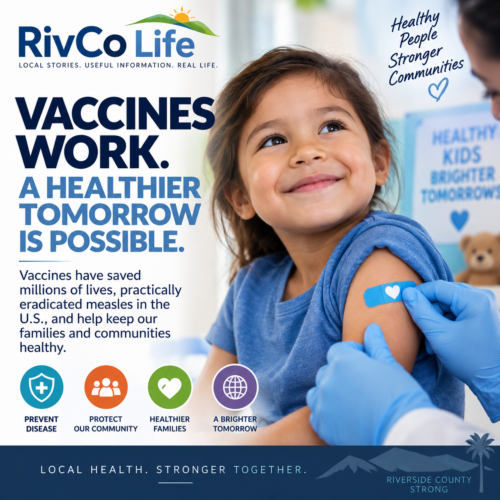
The measles, mumps and rubella vaccine is remarkably effective. Two doses are about 97 percent effective at preventing measles.
No vaccine—or medication—is completely without risk. Vaccines can cause side effects, most of which are mild and temporary. Serious reactions can occur, but they are rare.
Those risks should be discussed honestly.
What shouldn’t be treated as an equally legitimate scientific debate is the repeatedly disproven claim that the MMR vaccine causes autism.
Where the Autism Story Came From
Much of the modern controversy can be traced to a small study published in 1998 suggesting an association between the MMR vaccine and autism.
The study ultimately collapsed under scrutiny. It was retracted by the medical journal that published it, and its lead author, Andrew Wakefield, lost his license to practice medicine in the United Kingdom.
But the damage had already been done.
The idea escaped from the pages of a medical journal and entered popular culture.
Celebrities repeated it. Activists promoted it. The Internet gave it an audience that earlier medical misinformation could never have reached.
And eventually vaccine skepticism became entangled with politics.
Meanwhile, researchers kept studying the question.
Again.
And again.
And again.
Large studies conducted in different countries have failed to establish a causal relationship between vaccines and autism. In 2025, the World Health Organization’s Global Advisory Committee on Vaccine Safety reviewed decades of evidence and again concluded that the best available scientific evidence does not support a causal relationship between vaccines and autism.
Science should always remain open to new evidence. That’s part of what makes it science.
But being open to evidence doesn’t require pretending every claim remains equally plausible forever.
Measles Didn’t Disappear
The virus didn’t surrender.
We suppressed it by making it increasingly difficult for measles to find susceptible people.
When vaccination rates fall, that protection weakens.
And measles is extraordinarily contagious.
That’s why outbreaks tend to appear in communities where significant numbers of people are unvaccinated.
The consequences are no longer theoretical.
After the United States eliminated continuous measles transmission in 2000, outbreaks began appearing again. By August 20, 2026, the Centers for Disease Control and Prevention had recorded 2,777 confirmed measles cases across the country during the year.
A disease America once managed to eliminate is again infecting thousands of people.
Vaccination Isn’t Only About You
There is another part of this conversation that often gets overlooked.
Some people genuinely cannot receive certain vaccines.
A newborn may be too young. A cancer patient undergoing treatment may have a severely weakened immune system. Another person may have a medical condition that prevents vaccination.
Those people depend partly on the rest of us.
When enough members of a community are immune, an infectious disease has fewer opportunities to travel from one susceptible person to another. That community protection helps shield people who cannot protect themselves through vaccination.
That makes vaccination more than an individual healthcare decision.
It is also something we do for one another.
Questions Are Not the Enemy
Parents should ask questions about vaccines.
They should ask what is being given to their children. They should ask about effectiveness, side effects and risks. They should discuss medical concerns with qualified healthcare professionals.
Blind trust isn’t necessary for good public health.
But neither is blind distrust.
There is an enormous difference between skepticism and rejecting decades of evidence because something frightening appeared in a social-media post.
Medical science isn’t perfect. Recommendations change as researchers learn more. Mistakes happen.
That’s precisely why good medicine relies on accumulating evidence rather than one doctor, one celebrity, one politician, one website—or one frightening anecdote.
We Already Ran This Experiment
Perhaps the strongest argument for vaccination isn’t theoretical.
We’ve already seen what happens.
Measles once infected millions of Americans.
A vaccine arrived.
Cases plummeted.
The United States eventually eliminated continuous domestic transmission.
Then vaccination rates declined in some communities, outbreaks returned, and thousands of Americans began contracting measles again.
We shouldn’t need photographs of children in iron lungs to understand why polio vaccination matters.
We shouldn’t need maternity wards filled with babies harmed by rubella to appreciate the MMR vaccine.
And we shouldn’t have to experience the diseases our grandparents feared before remembering why they worked so hard to prevent them.
Vaccines became victims, in some ways, of their own success.
They worked so well that we forgot what the world looked like without them.
Maybe it’s time we remembered.
RivCo Life
Local Stories. Useful Information. Real Life.